


There’s something about the Mongolian deel that feels steady.
Like it's been here longer than everything else, and probably will be long after everything else is gone.
It's easy to write it off as just traditional clothing at first. A long robe, tied with a sash, passed down through generations. But once you start looking into it, even a little, you realize the deel doesn't just belong to Mongolian culture. It carries it. The whole weight of it, quietly, without making a big deal out of anything.
A Design That Got It Right Early
The history goes back further than most people expect. Archaeological finds show early deel-like garments from around the X–XII centuries, and nomadic groups like the Xiongnu were already wearing clothing built on similar ideas over 2,000 years ago. The design shifted slowly over time, shaped by the demands of steppe life, until by the 13th century, the age of the Mongol Empire, it had already settled into something close to what we see today.
Think about that for a second. A design that old, still standing, still recognizable. That's not fashion doing its job. That's something getting it exactly right, early, and never really needing to look back.
Most clothing doesn't survive like that. Styles change because people get bored, or because something better comes along. The deel stuck around because nothing better did come along, at least not for the life it was built for. It adapted just enough to stay relevant without losing what made it work in the first place. That kind of staying power doesn't happen by accident.
More Than Clothing: The Deel and Power
It wasn't purely practical either. During the height of the Mongol Empire, clothing, especially the deel, became tied to rank and power. There were actual rules about what you could wear and when. Records from the enthronement of Güyük Khan describe nobles changing into different colored silk garments across multiple days, each color marking a different stage of the ceremony. White one day, red the next, then blue. The deel wasn't just functional. It was political. It told people who you were before you even opened your mouth.
And its influence didn't stop at Mongolia's borders. As Mongol rule expanded, so did its cultural reach, including clothing. Historical studies show that Mongolian fashion shaped Korean royal dress for close to a century during the Koryo and early Joseon periods. Mongolia wasn't just taking land. It was setting the standard, and neighboring regions followed, sometimes by choice and sometimes not, but they followed.
Built for Nomadic Life
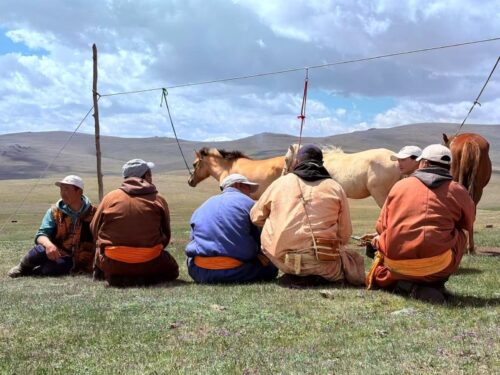
But for all the empire-level history attached to it, the deel was always built for real life first. Nomadic life. The kind where you're dealing with bitter cold, open distances, and hours on horseback with no shelter in sight. It keeps you warm, lets you move freely, and doesn't get in the way when you need to get things done.
The sash, called a büs, keeps everything wrapped tight and also ends up carrying small items when you need it to. Nothing about the design wastes space or effort. It doesn't try too hard, but somehow still manages to impress.
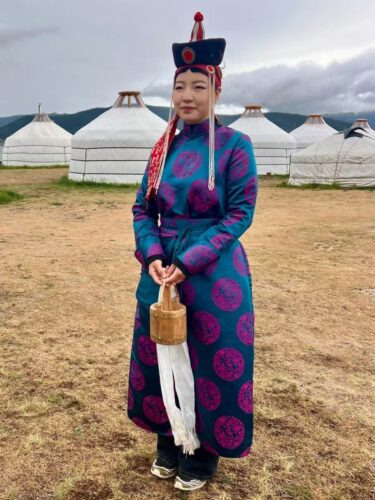
Color and material add another layer to it. A deel worn during celebrations tends to be brighter, often made from silk, sometimes detailed with embroidery that reflects both personal taste and the skill of whoever made it. That craftsmanship gets passed down too, quietly, the same way the garment itself does. So when someone shows up to Naadam in a well-made deel, it isn't just an outfit. It's a statement, even if a subtle one.
The Deel During Socialism
During the socialist period, traditional clothing like the deel got quietly pushed aside. It became associated with rural life, older generations, a past the state was trying to move away from. In cities, modern clothing took over, and the deel faded from everyday use for a while. Not completely, but enough to feel the shift.
Out in the countryside though, it never really left. Herders and families living traditional lifestyles kept wearing it because it still made sense, because it still worked better than most alternatives. It didn't survive because of cultural preservation campaigns or national pride efforts. It survived because it was still the most practical thing available for the life people were actually living.
The Deel’s Return
As Mongolia moved toward democracy and started reconnecting with its own identity, the deel came back stronger. People began wearing it at public gatherings and national events, not just out of habit but almost as a statement. A way of reaching back toward something older and more grounded, something that had been quietly waiting the whole time.
Today it exists across a few different worlds at once. In rural areas it's still everyday wear. In cities like Ulaanbaatar it shows up at festivals, weddings, and formal occasions. In fashion, designers are experimenting with it, shorter cuts, new fabrics, combinations with modern styles. Some of it works well. Some of it feels a little forced. But either way, it shows that the deel isn't frozen. It's still moving, just on its own terms and at its own pace.

In a world where most things feel temporary, that kind of quiet consistency is hard to ignore.
So no, the deel isn't just clothing.
It's history you can wear.

